
What Is a Zip and Link Mattress and Who Needs One?
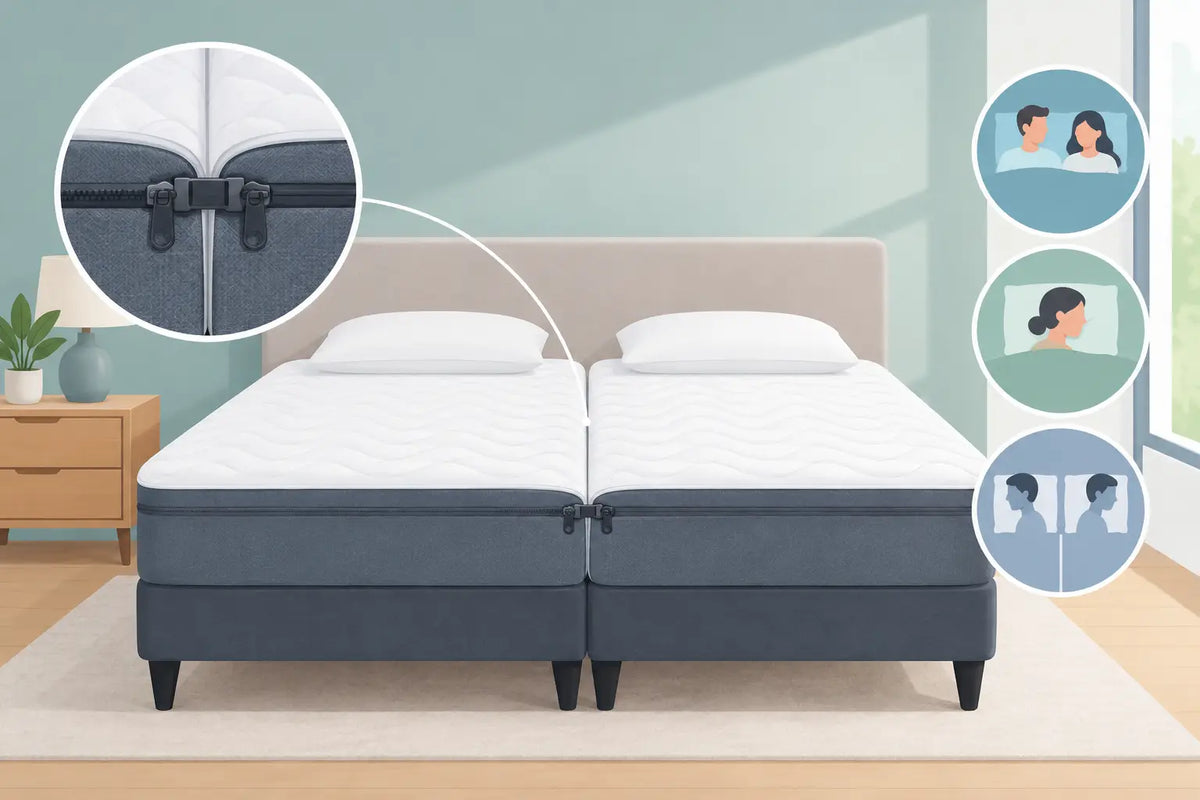
A bed can look like one large mattress while still giving each sleeper their own level of support. That is the straightforward answer to what is a zip and link mattress: two separate mattresses, made to the same overall dimensions, joined together with a zip when you want one larger sleeping surface.
It is a practical option, not a novelty. Zip and link mattresses suit couples with different comfort needs, large or awkward-to-access bedrooms, guest rooms that need flexibility, and bed frames built to non-standard measurements. The useful part is not the zip itself. It is the ability to specify each side properly rather than asking one mattress to suit two very different people.
What is a zip and link mattress?
A zip and link mattress is supplied as a pair. Each mattress has a compatible zip along one long edge, allowing the two pieces to be joined and used as a single bed. Unzipped, they become two separate mattresses.
For example, a standard UK super king size is 180 cm wide by 200 cm long. A zip and link version is usually made as two 90 cm by 200 cm mattresses, which zip together to create the full 180 cm width. The same principle works for emperor sizes, bespoke widths, extra-long beds and unusually shaped spaces.
The mattresses are normally joined with a purpose-made zip, rather than a removable cover or a strap wrapped around the middle. The zip keeps the pair aligned far more reliably than simply placing two single mattresses side by side. That said, it does not turn them into one solid block of upholstery. There is still a join, and buyers should be realistic about that.
Why choose a zip and link mattress?
The main reason is different firmness on each side. One person may prefer a medium feel with more pressure relief at the shoulders and hips, while the other needs a firmer surface or stronger support for a higher body weight. With a conventional one-piece mattress, one compromise has to be made. With zip and link, each half can be built differently while keeping the bed at one finished height.
This matters most when preferences are genuinely far apart. A difference of one firmness level may be manageable on a shared mattress, particularly with a suitable topper. A sleeper who likes a soft, contouring memory foam feel and a partner who wants a firmer pocket sprung mattress are unlikely to be happy with the same construction.
Access is another sensible reason. A large one-piece emperor mattress can be difficult to carry through narrow staircases, turn on a landing or take into a loft conversion. Two smaller sections are easier to handle, rotate and move. For properties with tight access, a zip and link design can make the difference between having the bed size you want and settling for a smaller one.
They also work well in guest accommodation. A pair can be zipped together for a couple, then separated into two singles for friends or family. This is common in holiday lets and guest rooms, but it is equally useful at home when a room needs to do more than one job.
The important point: the two sides must match in height
Different firmness does not have to mean different mattress depths. A well-specified zip and link pair should finish at the same height so that the join sits level and bedding fits properly.
That takes some thought in the construction. One side might use a firmer spring unit, while the other has more cushioning layers. The materials can differ, but the finished depth needs to be controlled. This is one reason made-to-order construction is useful. It allows the mattress to be built around the people using it, rather than treating split firmness as an afterthought.
At Cadar Beds, this can include specifying dimensions, comfort layers and spring support in the same order. For a bespoke bed frame, both halves should be planned around the exact internal dimensions of the base, not a label such as “king size” that may not reflect the space available.
Will you feel the zip in the middle?
Usually, you should not feel the zip itself when the mattresses are correctly made, aligned and covered with a fitted sheet. However, you may notice the central join more than you would on a one-piece mattress, especially if you sleep right in the centre of the bed.
The degree to which it is noticeable depends on the construction. Pocket sprung and hybrid mattresses with substantial comfort layers tend to provide a more accommodating surface across the join than very firm, shallow mattresses. A mattress topper can also soften the sensation of the split, although it changes the overall feel and should not be used to hide poor alignment or mismatched depths.
For most couples, the centre of a super king or emperor bed is not the main sleeping area. Each person naturally uses their own side, which is why the compromise is usually worthwhile. If you regularly sleep across the middle, or need an uninterrupted surface for a young child, a one-piece mattress may be the better choice where access allows.
Zip and link mattress sizes and bespoke dimensions
Many people encounter zip and link mattresses when looking at super king and emperor beds, but there is no reason to limit the idea to standard sizes. The pair can be made to a combined width and length that fits the frame.
That is useful for antique bedsteads, custom joinery, boats, cabins and rooms where wall-to-wall measurements leave no margin for guesswork. The key figure is the internal sleeping area of the bed base. Measure the width and length inside the frame in several places, particularly if it is older or handmade. A bed that is nominally 180 cm wide may not actually be 180 cm wide throughout.
Decide whether you want equal halves too. Two 90 cm sections make sense for a standard super king, but an uneven split can be made for particular requirements. For instance, one sleeper may need a wider section, or a bed may need to accommodate a fixed bedside feature. Unequal halves are specialist work, but they are often more practical than forcing a standard mattress into a non-standard frame.
Choosing the right construction for each sleeper
The zip and link format solves the shared-bed problem only if each side is chosen sensibly. Firmness labels are helpful, but they are not a universal measurement. Your body weight, sleeping position, existing aches and preferred surface feel all affect what feels supportive.
A side sleeper often needs enough cushioning to allow the shoulder and hip to settle without twisting the spine. A back sleeper may prefer a flatter, steadier feel. Heavier sleepers commonly need a more substantial spring system and durable comfort layers, not simply the firmest mattress available. “Orthopaedic” is not a regulated comfort standard, so it is better to look at the actual spring unit, fillings, depth and intended support level.
For partner disturbance, pocket springs are generally a stronger choice than open-coil springs because each spring works more independently. Memory foam can reduce movement transfer further, though some people find it warmer or less easy to turn on. Latex has a quicker response and can feel more buoyant. Natural fillings such as wool can help regulate temperature and create a drier, more traditional feel, but they may need more care and regular turning depending on the design.
The two sides do not have to use entirely different materials. Sometimes the right answer is the same pocket sprung construction with one medium side and one firm side. That keeps the surface character similar while changing the support level.
What to check before ordering
First, confirm how your bed base supports the mattress. A solid platform, sprung slats and flexible slats can all affect the feel. Slats should be closely spaced and in good condition, particularly under a heavy mattress. If the base has a centre rail, make sure it is properly supported so both halves sit level.
Second, check the intended orientation. Most zip and link mattresses are designed to join down the middle, but head and foot labels matter if the construction is zoned or has a particular sleeping surface. Rotating the pair together may be recommended, while turning it over may not be, depending on whether the mattress is single-sided or double-sided.
Finally, buy bedding for the combined bed size, not for the individual halves. A single fitted sheet will help keep the pair together visually and reduce movement at the join. If you use a protector or topper, choose one made for the full finished dimensions and depth.
A zip and link mattress is worth considering when flexibility or separate comfort is more valuable than having one uninterrupted mattress core. Get the measurements right, make sure both sides finish at the same height, and choose the support for the people sleeping on it rather than the most persuasive label. That is how a large bed becomes properly shared, without either person having to settle for the wrong mattress.