
Natural Mattress Fillings Explained Clearly
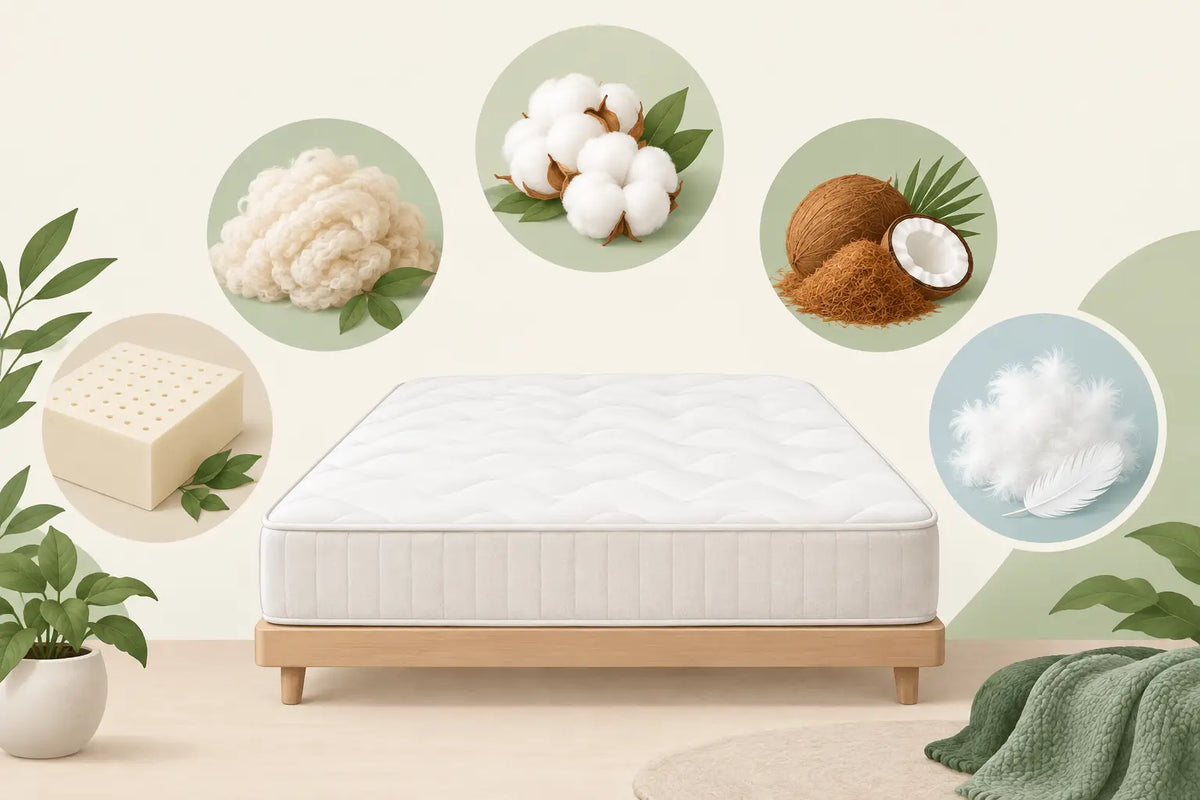
A mattress labelled “natural” can contain anything from a thin wool layer to a substantial mix of horsehair, cotton, cashmere, coir and latex. Those materials do different jobs. Natural mattress fillings explained properly means looking beyond the label and asking where each filling sits, how much of it is used, and what supports it underneath.
A generous natural comfort layer cannot turn an unsuitable spring unit into the right mattress for you. Equally, a well-made pocket-sprung mattress can feel entirely different depending on whether it is filled with wool, hair, cotton or latex. The useful question is not whether natural is automatically better. It is whether the material combination suits your temperature, preferred feel, body weight and bed base.
What natural fillings actually do
Mattress fillings sit above, below and sometimes between the spring layers. Their main roles are to regulate moisture, manage warmth, alter the feel of the surface and protect the spring unit from direct wear. In traditional hand-tufted mattresses, fillings are compressed and held in place with tufts. This creates a firmer, more stable sleeping surface than a thick, loose comfort layer.
Natural fibres are often valued because they can absorb and release moisture vapour. That matters because people perspire during sleep, even in a cool room. A breathable filling helps prevent that damp, clammy feeling that can develop when heat and moisture remain close to the body.
However, breathability is not a magic word. The cover fabric, protector, bed base, room temperature and depth of the upholstery all affect how a mattress sleeps. A natural-filling mattress with a waterproof protector may feel warmer than its filling specification suggests.
Wool: the all-round practical filling
Wool is one of the most useful mattress fibres because it offers warmth without behaving like a solid heat-trapping layer. Its crimped structure holds air for insulation, while the fibre can also manage moisture effectively. That is why wool appears in mattresses designed for year-round comfort.
It adds a cushioned but resilient feel rather than the deep contouring associated with memory foam. Used in larger quantities, it can make a mattress feel pleasantly full at first, then settle and become firmer over time. This is normal compression, not necessarily a fault.
Wool is especially sensible for sleepers who get cold, couples with different temperature preferences, and people who want a traditional upholstered feel. It is less suitable for someone seeking a very soft, slow-moving surface. If animal-derived materials are not appropriate for your household, wool is also one to rule out at the start.
Cashmere: a comfort fibre, not a reason to ignore the build
Cashmere is soft, fine and insulating. It is generally used as a blended luxury layer rather than as the main filling in a mattress. A little cashmere can improve surface feel and warmth, but it does not tell you much about the mattress’s overall support or durability on its own.
This is an area where mattress marketing can become vague. “Cashmere mattress” may describe a small amount of cashmere in a blend, not a mattress packed with it. Look for a clear filling description and judge the whole construction: springs, upholstery depth, tufting and intended firmness all matter more than a premium-sounding word on the label.
Cotton: cool, familiar and firmer than many expect
Cotton is breathable and absorbent, with a clean, less springy feel than wool. In a mattress, it can help create a cooler, flatter and more traditionally firm sleeping surface. It is commonly combined with wool or other fibres to balance warmth and structure.
Cotton does not recover in quite the same way as wool or hair. Over time, it can compact, particularly in a mattress with soft upholstery or regular use by heavier sleepers. That does not make it a poor material. It simply means cotton works best when it is used thoughtfully within a properly supported construction.
For people who dislike the buoyant feel of latex and the close hug of foam, cotton-rich upholstery can be a good fit. It is also worth considering for a mattress used in a warm bedroom, although no filling alone can compensate for poor ventilation beneath the bed.
Horsehair: resilient, ventilated and traditionally firm
Horsehair is a classic high-end mattress filling, prized for its springiness and airflow. The fibres are naturally curled, creating a resilient layer that helps the mattress recover after pressure. This gives it a noticeably livelier feel than cotton and a firmer, more supportive character than soft foam.
Because its open structure allows air to move, horsehair is useful in substantial upholstered mattresses where heat management matters. It is often paired with wool, cotton or cashmere to soften its feel. A mattress containing horsehair need not feel hard, but it will usually feel more responsive and less enveloping than one built around deep foam.
Horsehair is not vegan, and it raises understandable questions for buyers concerned about animal-origin materials. A responsible specification should state its presence plainly rather than hiding it behind broad phrases such as “natural fibres”. If you want animal-free materials, latex, cotton and plant-based fibres offer alternative routes, though each has its own trade-offs.
Coir: firm support from coconut fibre
Coir is made from coconut husk fibre. In mattresses, it is usually formed into a dense pad and often bonded with latex. Its job is not to provide plush comfort. It is a firm, breathable support layer that can add stability, particularly in a traditional sprung build.
You may appreciate coir if you prefer a firmer mattress, need a more stable feel, or are building a mattress for a slatted frame that needs good airflow. It is less likely to suit someone with prominent shoulders or hips who needs deeper pressure relief. In that case, coir may still work, but it should be balanced with softer upholstery above it.
Coir can be useful in a made-to-measure mattress because bespoke dimensions sometimes need a construction that remains stable across an unusually wide, long or shaped bed frame. The material alone is not the answer, but its firmness can be an advantage in the right design.
Latex: natural, but check what the label means
Latex comes from the sap of the rubber tree when it is natural latex. It is elastic, pressure-relieving and responsive, so it cushions the body while pushing back more quickly than memory foam. It is also commonly perforated, allowing better airflow than a solid foam block.
The important distinction is between natural latex, synthetic latex and blended latex. A product described simply as “latex” may contain a mixture. That is not automatically bad, but it should be stated clearly. If natural content is a priority, ask for the material specification rather than assuming the word latex answers the question.
Latex usually gives a gently buoyant surface and can be a good choice for combination sleepers who turn often. It may feel too springy for those who want the slower, deeper sink of memory foam. Latex can also add weight and cost, particularly in a thick layer.
Natural fillings do not remove the need for proper support
Natural upholstery changes comfort, climate and surface feel. Support comes principally from the mattress’s core construction: pocket springs, open-coil springs, latex core, foam core, or a combination of these. For most adults, a pocket-sprung mattress with appropriately chosen fillings offers a useful balance of support and comfort, especially when partners have different weights or sleeping positions.
Spring count alone is not enough either. The gauge of the wire, spring height, zoning, edge support and upholstery above the springs all influence the result. A heavily upholstered, hand-tufted mattress may feel firmer than a thinner mattress with the same spring unit because the tufts compress and stabilise the fillings.
This is why a clear specification is more helpful than broad claims such as “luxury natural” or “orthopaedic”. Neither phrase tells you the firmness, the quantity of fillings or whether the mattress is suitable for your body and sleeping style.
Questions worth asking before you buy
Start with the practical details. Ask whether the listed materials are surface fibres or substantial upholstery layers, whether latex is natural or blended, and whether the mattress is hand-tufted or non-tufted. If you sleep warm, ask how the whole mattress manages airflow, including the base beneath it. If you have allergies, seek specific guidance rather than assuming every natural material is automatically suitable.
Also consider maintenance. Most traditional natural-filling mattresses benefit from regular turning or rotating, depending on their construction. This helps upholstery settle more evenly and extends its working life. A no-turn design is convenient, but it often achieves that convenience through a one-sided build rather than through superior materials.
Finally, measure the bed frame rather than relying on a named size. An antique frame, boat berth or custom-built bed may be a few centimetres away from a standard UK size, and that is enough to affect fit and edge support. Cadar Beds builds mattresses to precise dimensions, which allows the filling and support choice to fit the bed as well as the sleeper.
A well-chosen natural filling should have a clear purpose in the mattress, not merely a place on the label. Choose the feel you need, check the construction behind it, and give as much attention to the support system as you do to the fibres nearest the surface.