
Choosing Mattress Firmness for Back Pain
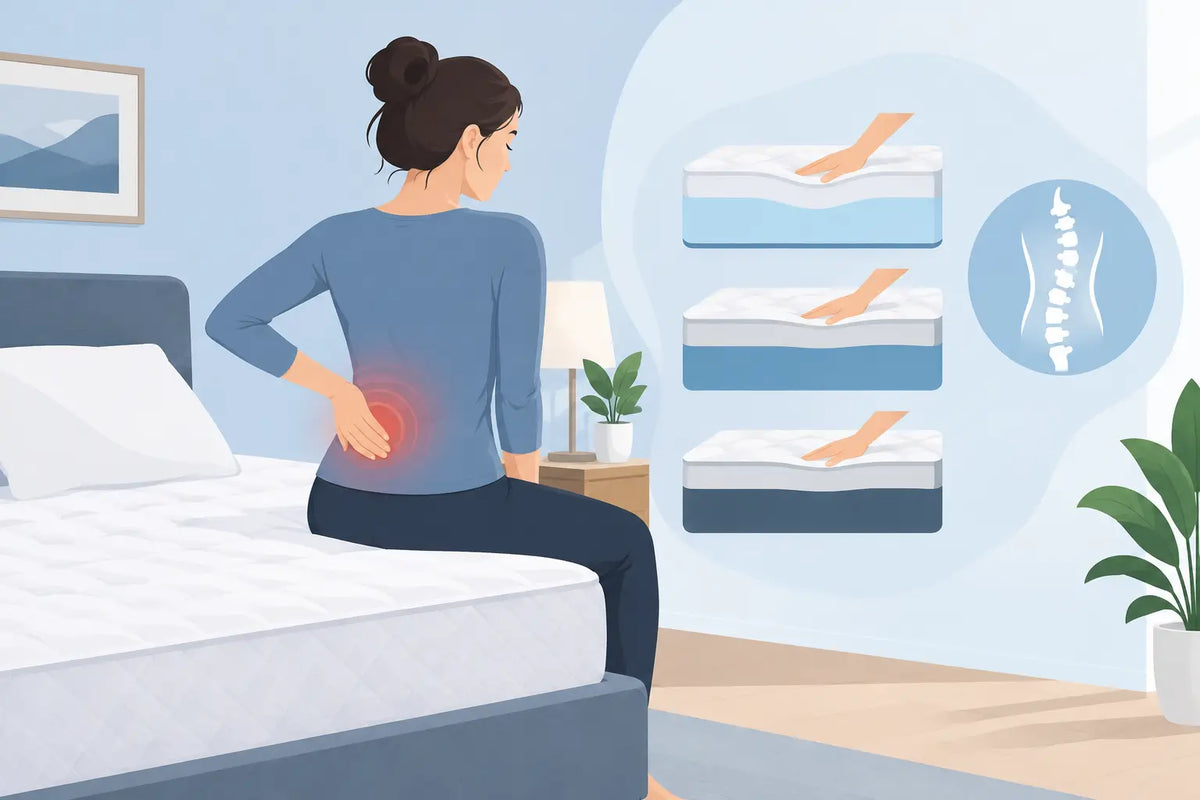
Waking with a stiff lower back is not proof that you need the hardest mattress in the shop. In fact, choosing mattress firmness for back pain is usually less about buying “firm” and more about keeping your spine supported in a neutral, comfortable position for the way you sleep and the body you sleep in.
A mattress cannot diagnose or cure back pain. Persistent, severe or worsening pain needs advice from a qualified clinician, particularly if it follows an injury or comes with numbness, weakness, fever or unexplained weight loss. But if your discomfort is most noticeable first thing in the morning, eases once you are moving, or started as your old mattress sagged, the surface beneath you may well be part of the picture.
Mattress firmness for back pain: support comes first
Firmness describes the initial feel of a mattress. It is what you notice when you first lie down: soft, medium, firm or very firm. Support is different. It is the mattress’s ability to hold your body level, without allowing your hips, shoulders or middle to sink too far.
These terms are frequently muddled. A very firm mattress can still be poorly supportive if its spring system is weak or its fillings compress unevenly. Equally, a medium-feel mattress with a well-built pocket spring unit, resilient latex or dense foam can provide excellent support. The useful question is not “Is this orthopaedic?” That word has no formal medical standard in the mattress industry. Ask instead how the mattress is built, what is doing the supporting, and whether it suits your sleeping position and body weight.
For many adults with ordinary mechanical back discomfort, a medium-firm feel is a sensible starting point. It offers enough give for pressure points while resisting the hammock effect that can occur on a worn-out soft mattress. It is a starting point, not a universal prescription.
Your sleeping position changes the answer
Side sleepers usually need more pressure relief around the shoulder and hip. If the surface is too firm, those areas cannot settle into it, which may push the spine sideways and leave you changing position through the night. A medium or medium-firm mattress with a responsive comfort layer is often more comfortable, provided the core remains supportive.
Back sleepers tend to need steady support through the lower back and pelvis. Too much softness can let the hips drop below the chest, increasing strain through the lumbar area. Medium-firm to firm is commonly the better range, but a firmer feel should still have enough surface cushioning that your lower back is not left unsupported.
Front sleeping is the hardest position on the lower back because it can encourage the pelvis to dip and the neck to twist. A firmer, flatter sleeping surface may limit hip sink, though changing gradually towards side or back sleeping can also help some people. A low-profile pillow is often as relevant as the mattress here.
Body weight affects perceived firmness
The same mattress does not feel the same to everybody. A lighter person may find a firm mattress unyielding because they do not compress the comfort layers enough. A heavier person may find a medium mattress too soft because they sink further into it.
As a general rule, lighter sleepers often prefer medium or medium-soft comfort over a supportive base. Average-weight sleepers frequently settle around medium-firm. Heavier sleepers often benefit from firmer, more resilient constructions that maintain alignment and resist premature dips. This does not mean every heavier person needs a hard mattress. It means the support system needs enough capacity for their body, night after night.
When comparing specifications, look beyond a vague firmness label. Pocket spring count, wire gauge, foam density, latex type, tufting and the depth and composition of the comfort layers all influence how a mattress carries weight. A heavy-build mattress may be the more sensible choice where ordinary domestic construction is likely to compress too quickly.
What mattress construction can help?
There is no single best material for a sore back. Construction matters more than fashionable names on a label.
Pocket sprung mattresses can be a strong option for couples and combination sleepers. Individual springs respond locally, so the mattress can support the hips while allowing a shoulder to settle in. A good-quality pocket unit also reduces the feeling of one person rolling into the other. Natural fillings such as wool, cashmere, horsehair and coir alter the feel, breathability and resilience, but they do not automatically make a mattress better for pain. Their value depends on how they are layered and matched to the spring system.
Memory foam can provide close pressure relief and can be useful for side sleepers who feel pain around the shoulders or hips. The trade-off is that some people dislike its slower response or sleep warm on deep foam layers. Density and depth matter: a thin memory foam layer over poor support will not repair a sagging mattress underneath.
Latex has a more buoyant feel than memory foam. It responds quickly when you move and is naturally resilient, making it a practical choice for sleepers who want contouring without feeling stuck. It can be particularly appealing if you turn frequently during the night.
Hybrid mattresses combine springs with foam, latex or other comfort materials. They can work very well, but “hybrid” is a category, not a quality guarantee. Check what is actually inside and whether the construction is appropriate for your weight and preferred feel.
Open-coil mattresses are usually the more economical choice. They can be perfectly serviceable for occasional use or lighter demands, but they generally offer less tailored contouring and partner isolation than pocket springs. For ongoing back discomfort, it is worth assessing whether the saving is likely to be outweighed by reduced comfort and lifespan.
Signs your current mattress may be aggravating your back
A mattress is not necessarily at fault simply because it is old. However, visible dips, raised ridges, noisy springs, edge collapse and a clear improvement when sleeping elsewhere are useful clues. So is needing to sleep in an unusually narrow patch because the rest of the surface has lost its shape.
Check the bed base as well. Broken slats, a bowed platform or inadequate centre support can make a sound mattress feel unsupportive. On a slatted base, the slats should be secure, reasonably close together and supported across the middle where required. A new mattress placed on a failing base is an expensive way to preserve the same problem.
Your pillow also affects what your back feels in the morning. On your side, it should fill the space between shoulder and head without forcing the neck upwards. On your back, it should support the neck’s natural curve without tipping the chin towards the chest. A mattress and pillow need to work as a pair.
How to choose without relying on a label
Begin with your usual sleep position, body weight and whether you sleep alone or with a partner. Then consider the mattress that will be beneath the upholstery, not just the first-minute showroom feel. If you share a bed and have clearly different preferences, compromise is not always the answer. Split tensions, where appropriate for the bed arrangement, can allow each side to be built differently.
For unusual bed frames, boats, alcoves or extra-long sleeping spaces, dimensions matter just as much as comfort. A made-to-measure mattress should still be specified with proper support in mind: exact width and length, finished depth, intended base, user weight and preferred feel all affect the final build. Buying a standard mattress that does not fit the frame properly can create edge strain and shorten its useful life.
Do not be swayed by claims that a mattress is medically approved simply because it is firm. Look for clear construction details, stated materials, sensible weight guidance and fire-safety compliance. A proper trial period is useful because a few minutes on a mattress cannot tell you how your back will respond after several nights. Give your body a short adjustment period, especially if you are moving from a deeply worn mattress to one with real support.
Cadar Beds builds mattresses by hand and can produce made-to-measure sizes, which is useful when an existing frame cannot accept an off-the-shelf UK size. The practical benefit is not novelty. It is being able to match the mattress to the bed, the sleeper and the support level required, rather than forcing all three to fit a standard option.
A firmer mattress is not always the better mattress
If your lower back aches because your hips sink too deeply, moving towards a firmer and more supportive design may help. If your shoulders and hips hurt because you are lying on an unyielding surface, more firmness may make matters worse. The right mattress should feel stable beneath your middle while allowing enough pressure relief at the areas that need it.
Choose for alignment, not bravado. A mattress should support your body quietly in the background, leaving you less aware of pressure points, partner movement and the urge to keep shifting position. That is a more useful measure than any bold label on the border.