
Made to Measure Mattress UK for an Exact Fit
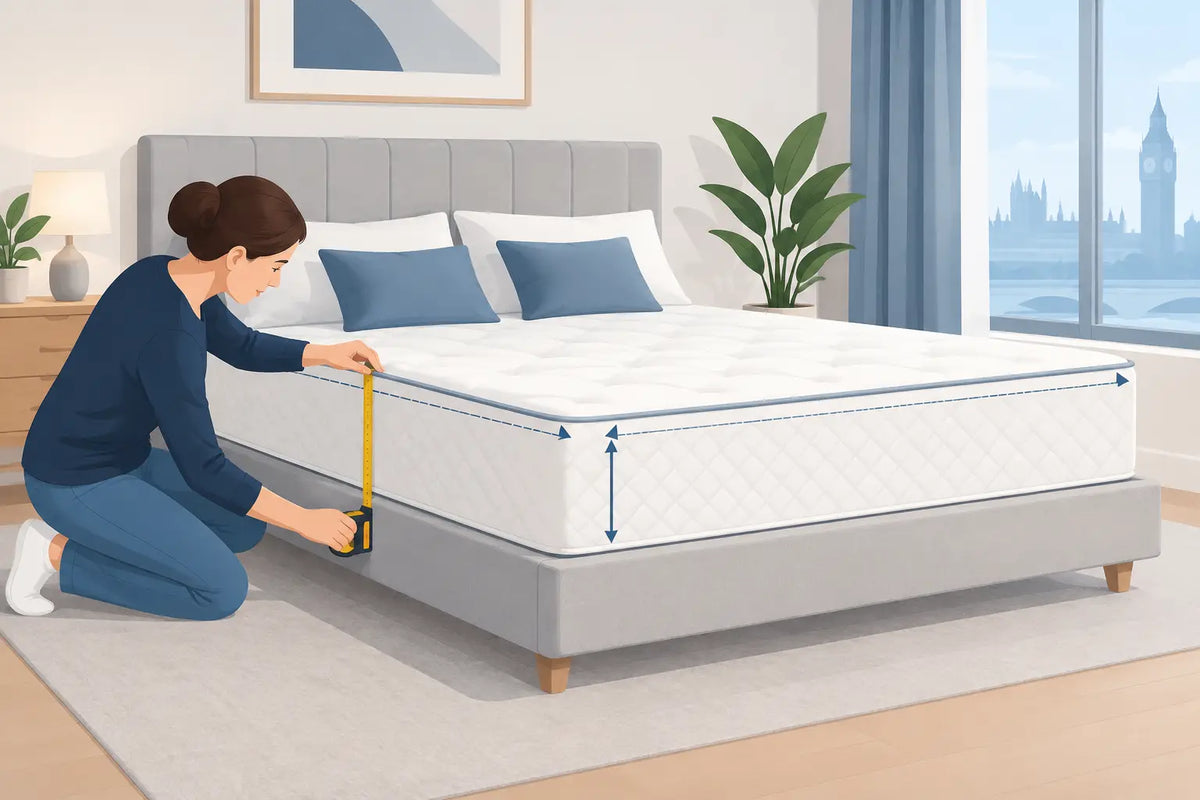
An antique bed frame can be 6 cm narrower than a standard double. A boat berth may taper at one end. A loft conversion can leave room for a long bed but not a wider one. These are not problems a standard 135 x 190 cm mattress can solve with clever wording. A made-to-measure mattress UK service exists for the point where the bed, room and person using it do not fit the standard chart.
The important part is not simply ordering a mattress in an unusual size. It is getting the dimensions right, choosing a construction that suits how you sleep, and knowing what custom sizing can and cannot fix. A mattress made precisely for a frame should fit cleanly without being forced into place or leaving a gap that collects dust and swallows bedding.
When a made to measure mattress is worth it
A bespoke mattress is sensible when the frame is a genuine non-standard size, rather than merely looking unusual. Older British and European frames often vary by a few centimetres. Caravan beds, campervans, narrowboats, cabins and daybeds are frequently built around the available space rather than conventional mattress dimensions. Extra-long beds for taller sleepers, very wide family beds and shaped berths also fall outside ordinary retail sizes.
It can also be the more practical choice when replacing a mattress in a frame you already like. Changing a solid wooden, upholstered or inherited bed simply because its internal dimensions are awkward is rarely the economical answer.
Custom does not automatically mean extravagant. Price should follow the materials, spring system, depth and labour involved, not a vague idea of luxury. The useful distinction is between a mattress built to your dimensions and a retailer adding a premium because the size is inconvenient to stock.
Measure the bed, not the old mattress
An old mattress is a poor template. It may have softened at the edges, shrunk slightly, bowed, or been the wrong size from the start. Measure the inside of the frame where the new mattress will sit.
Take the width and length in at least three places: at both ends and through the middle. On handmade and older frames, those figures may not match exactly. Use the smallest internal measurement as the working size unless the maker advises a specific allowance. A mattress that is technically only a little too large can be difficult to remove, can rub against the frame, and may prevent airflow around the sides.
Measure the depth too. This matters where a mattress sits within a recessed frame, has a surrounding lip, or needs to remain below the height of a guard rail. A deep, heavily upholstered mattress can be excellent for comfort, but it is not always suitable for a bunk, boat berth or bed with drawers that need clearance.
For tapered or shaped spaces, make a simple full-size paper template where possible. Record which end is the head and which side faces the wall. A rectangle with one altered corner is easy to describe wrongly over the phone or in a sketch. Clear measurements remove guesswork.
Leave room for bedding and handling
A close fit is good. A jammed fit is not. Consider whether fitted sheets will need to tuck around the corners, whether the mattress must pass through a narrow stairwell, and whether it needs to be lifted regularly to access storage. For a hinged ottoman base, the mattress weight matters as much as its size.
If the frame uses slats, check their condition and spacing before ordering. Wide gaps can reduce support and shorten the life of some foam and pocket-sprung mattresses. A sound, evenly supported base gives the mattress a fair chance of performing as intended.
Choose the construction before the finish
Once the measurements are settled, the bigger decision is what goes inside. The label matters less than the build.
Pocket springs are a strong all-round choice for couples because each spring works more independently than a conventional open-coil unit. They can reduce the amount of movement you feel when the other person turns over, particularly when paired with comfort layers that suit both sleepers. More springs alone do not guarantee a better mattress. Spring gauge, height, zoning, padding and the quality of the surrounding layers all affect the result.
Memory foam responds closely to body heat and pressure, giving a more enveloping feel. Some people value that pressure relief around shoulders and hips; others find it warmer or less easy to turn on. If overheating is a concern, look beyond the phrase "cooling" on a label. Ask what material is actually used, how thick it is, and what breathable layers sit around it.
Latex is naturally springy, durable and responsive. It tends to suit sleepers who want pressure relief without the slower feel of memory foam. Natural-filling mattresses can offer a more traditional, breathable feel, with materials such as wool, cashmere, horsehair and coir used for temperature regulation, resilience and firmer structure. These constructions are often deeper and heavier, so they need a suitable base and realistic handling expectations.
Open-coil mattresses remain a practical option for guest beds, lighter use and tighter budgets. They are not automatically poor quality, but the overall support and longevity will usually differ from a well-built pocket-sprung or layered mattress. The right choice depends on how often the bed is used and what you expect from it.
Firmness is personal, not a diagnosis
Terms such as "orthopaedic" can sound authoritative, but there is no formal medical standard behind the word. Firmness is not a treatment for back pain, and the firmest mattress is not automatically the most supportive.
Body weight, sleeping position, build and preference all matter. A side sleeper often needs enough give at the shoulder and hip to keep the spine in a more neutral position. A front sleeper may prefer a flatter, more stable surface. Heavier sleepers may need a firmer spring unit, stronger edge support or a heavy-build construction so the mattress holds its shape under greater load.
For couples with different preferences, compromise is sometimes sensible and sometimes needless. A split construction or different comfort levels on each side can work well in larger sizes, provided the join and cover are properly considered. If one person likes a soft top and the other wants a firmer feel, do not assume a medium mattress will satisfy either of you.
Check the details that affect real ownership
A made-to-measure mattress is made for you, so its return and trial terms may differ from a standard-size model. Read these before ordering rather than treating custom work like an off-the-shelf purchase. The same applies to lead times, delivery access and whether the mattress arrives rolled or flat.
Fire safety should be plain, not buried in small print. Upholstered mattresses sold for domestic use in the UK must meet applicable furniture fire-safety requirements. Ask whether the product has been tested and whether its components are specified clearly. A mattress does not become safer because a product description uses reassuring language.
It is also worth checking the guarantee in practical terms: what is covered, how long it lasts, and what level of settlement is considered normal. All mattresses settle to some degree as fillings bed in. That is different from a structural fault or a failed spring unit.
Cadar Beds makes mattresses by hand in its own factory, allowing dimensions, depth and construction to be specified rather than selected from a restricted warehouse list. For unusual sizes, live pricing is more useful than a quote form followed by a sales call: you should be able to see how a change in width, length or build affects the order before committing.
Do not let custom sizing distract from comfort
The frame may dictate the width and length, but you still sleep on the surface. If your current mattress causes shoulder pressure, traps heat, lets you feel every movement, or feels unstable at the edge, specify the problem as clearly as you specify the centimetres.
A well-made mattress in the wrong comfort style is still the wrong mattress. Conversely, a carefully chosen build in an exact size can make an awkward bed frame feel like it was designed around you. Measure carefully, ask direct questions about materials, and choose the construction you will be happy to lie on night after night.