
Is a Latex Mattress for Hot Sleepers Cooler?
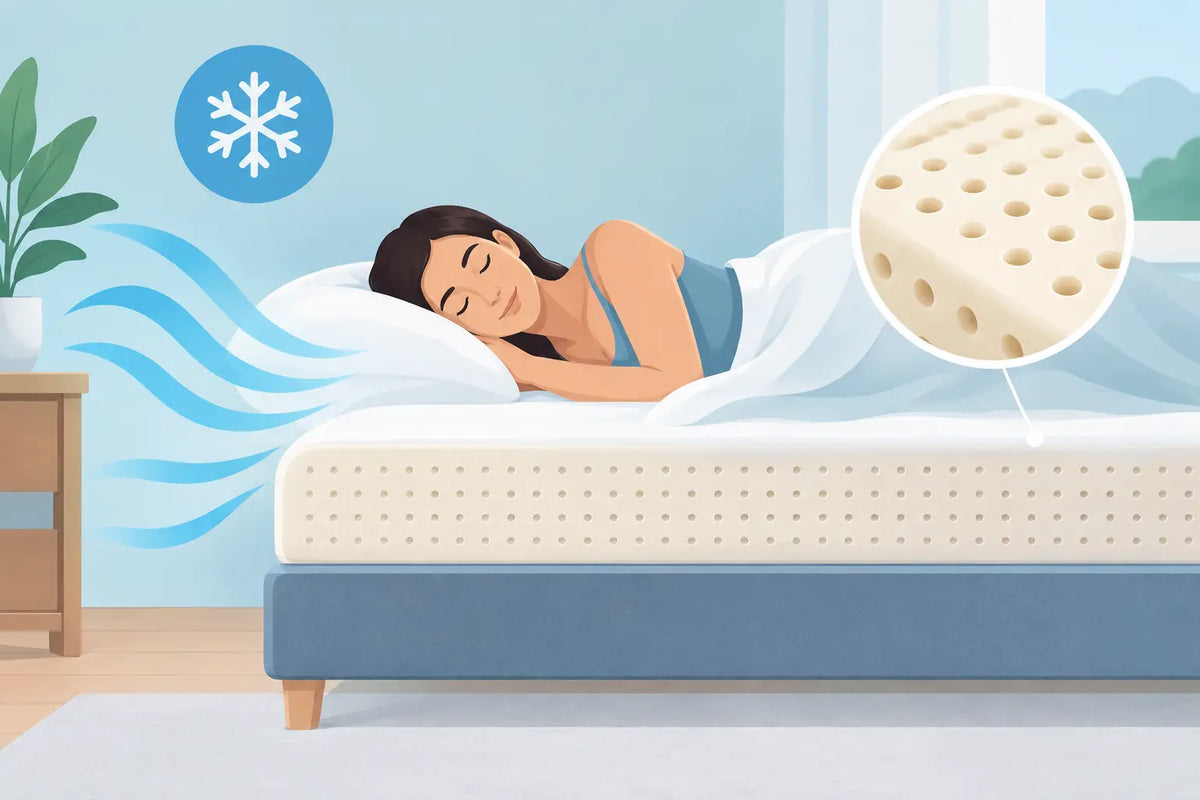
Waking at 3am because the mattress feels warm beneath your shoulders and hips is rarely solved by a label that says “cooling”. For many people, a latex mattress for hot sleepers is a sensible option because latex is naturally springy, breathable and less likely to hold heat around the body than dense, slow-response foam. But latex is not a magic material, and the rest of the mattress matters just as much.
A warm sleeper needs to look beyond the comfort layer. The mattress core, cover, protector, duvet, bed base and even the bedroom itself all affect how hot the bed feels. The useful question is not simply whether latex sleeps cool, but whether a particular latex mattress is built in a way that allows heat and moisture to move away from you.
Why a latex mattress can suit hot sleepers
Latex has an open, aerated structure. Most mattress latex is produced with small holes through the material, allowing air to move more freely than it can through a solid block of conventional memory foam. Its natural elasticity also means it recovers quickly when you move, rather than moulding tightly around the body for long periods.
That responsiveness is a practical advantage at night. When a material closely envelops your body, it reduces airflow around the areas where you generate the most heat. Latex cushions pressure points without the deep, slow sink associated with many memory foam designs. You still get contouring at the shoulders, hips and lower back, but usually with a more buoyant feel.
Natural latex is also inherently resilient. A good-quality layer should retain its shape and support for longer than cheaper comfort foams, so the mattress is less likely to develop a body impression that leaves you sitting in a warmer pocket. That said, durability depends on the full construction, not only the latex layer.
Latex is cooler than what, exactly?
Compared with a thick layer of traditional memory foam, latex will often feel less heat-retentive. This is particularly true for sleepers who dislike the sensation of being held in place by their mattress. If that is your experience, a responsive latex comfort layer over pocket springs is often worth considering.
Compared with a firm pocket-sprung mattress with natural fillings, the answer is less clear-cut. Pocket springs leave substantial space for air to circulate, while fillings such as wool can absorb moisture vapour and help regulate the sleeping surface across changing seasons. A well-made natural pocket-sprung mattress may sleep at least as comfortably as an all-latex design for someone who runs warm.
Latex can also feel warmer when it is used in a very thick, soft layer. More material around the body generally means more insulation, regardless of whether the material is marketed as breathable. A 2cm latex layer used for pressure relief will feel different from a 7cm soft latex comfort system. Neither is automatically better - it depends on your weight, preferred sleeping position and how much cushioning you need.
The construction beneath the latex matters
A latex mattress for hot sleepers is usually most effective when latex is paired with a breathable support system. Pocket springs are a strong choice because the individual springs can move independently and air can pass through the spring unit. They also give more structured support than foam alone, which many people prefer, especially if they are heavier or share a bed.
An all-foam mattress can still be comfortable, but its heat performance depends heavily on its design. Latex over a dense foam base may sleep cooler than memory foam, yet the foam core can still limit airflow compared with a sprung mattress. This does not make it a poor choice. It simply means that claims of “cooling” need to be read in context.
Natural upholstery layers can improve the balance further. Wool is particularly useful because it helps manage moisture, rather than just attempting to make the mattress feel cold on first contact. A mattress does not need to feel chilly to be comfortable. It needs to avoid trapping excessive heat and humidity as the night goes on.
The cover deserves attention too. A breathable knitted cover can help, but it cannot compensate for a heat-retaining core. Likewise, a mattress with a natural cotton or wool-rich ticking may feel pleasant and better at handling moisture, though it will not turn an unsuitable build into a cool-sleeping one.
Dunlop and Talalay latex
You may encounter two common descriptions: Dunlop latex and Talalay latex. Both can be used in quality mattresses, but they tend to feel different.
Dunlop latex is generally denser and more substantial. It is often chosen for supportive layers and has a grounded, stable feel. Talalay latex is typically lighter and more airy in feel, often used where a softer, more pressure-relieving surface is wanted. Neither label guarantees that one mattress will sleep cooler than another. Layer thickness, firmness, spring system and upholstery are more useful indicators than the manufacturing name alone.
Also check whether a product states natural latex, synthetic latex or a blend. “Latex” is a material category, not a complete specification. A transparent mattress description should tell you what is actually inside and, ideally, how thick each comfort layer is.
Choose firmness with temperature in mind
Firmness is mainly about support and comfort, but it can influence warmth. If a mattress is too soft for your body weight, you will sink more deeply into it. That increases the contact area between you and the mattress, reducing ventilation around your body. Side sleepers need enough give at the shoulder and hip, but they should not feel as though they are lying in a hollow.
Conversely, buying a mattress that is too firm simply to stay cooler is a poor trade-off. Pressure on the shoulder or hip can cause restless sleep, and frequent tossing and turning will not make the bed more comfortable. The aim is stable support with only the amount of surface cushioning you genuinely need.
For couples, this can become more complicated. One partner may sleep hot and prefer a firmer, more buoyant surface, while the other needs greater pressure relief. A made-to-measure mattress can be useful where the bed frame is non-standard, but it also allows more control over depth and construction. There is little value in choosing an oversized bespoke mattress if the comfort build is still wrong for the people using it.
Do not let bedding undo the mattress choice
A breathable mattress can still feel uncomfortably warm under an impermeable protector, a heavy synthetic duvet and polyester-rich sheets. Mattress protectors are often overlooked because they sit out of sight, but some waterproof designs restrict airflow noticeably. If you need a waterproof layer, look for one designed to remain breathable and accept that there may still be a modest trade-off.
For sheets, cotton percale, linen and other breathable fabrics are usually more helpful than brushed polyester when you sleep warm. Duvet choice matters more than many mattress shoppers expect. A lighter tog rating for summer, or separate duvets for partners with different temperature needs, can solve a problem that no mattress can fully address.
Your bed base should not be ignored either. A slatted base generally permits more ventilation beneath the mattress than a solid platform. This is especially relevant for foam-heavy mattresses and for beds in smaller rooms where air can feel still. Follow the manufacturer’s guidance on base suitability, as incorrect slat spacing or inadequate support can affect both comfort and mattress life.
What to check before buying
Marketing terms such as “temperature regulating”, “cool touch” and “climate control” are not standardised mattress specifications. They can describe anything from a genuinely breathable construction to a thin cover treatment. Ask for the useful details instead: the latex type and thickness, the support core, the other fillings, the total mattress depth and the recommended base.
It is also worth checking whether the mattress is one-sided or designed to be turned, and whether rotation is recommended. Regular care helps keep upholstery evenly settled. A mattress that remains properly supported is more likely to maintain the feel you chose in the first place.
At Cadar Beds, the advantage of factory-made construction is not a vague promise of luxury. It is the ability to specify materials and dimensions clearly, including mattresses for unusual frames, long beds and made-to-measure spaces. For a hot sleeper, that clarity matters: you can judge the actual build rather than trying to interpret a cooling badge on a showroom label.
The best mattress for a warm sleeper should feel calm rather than clever. Choose enough latex for responsive pressure relief, pair it with breathable support, and keep the bedding around it equally considered. A cooler night often comes from several honest material choices working together, not one fashionable ingredient.