
How to Choose a Mattress Topper That Works
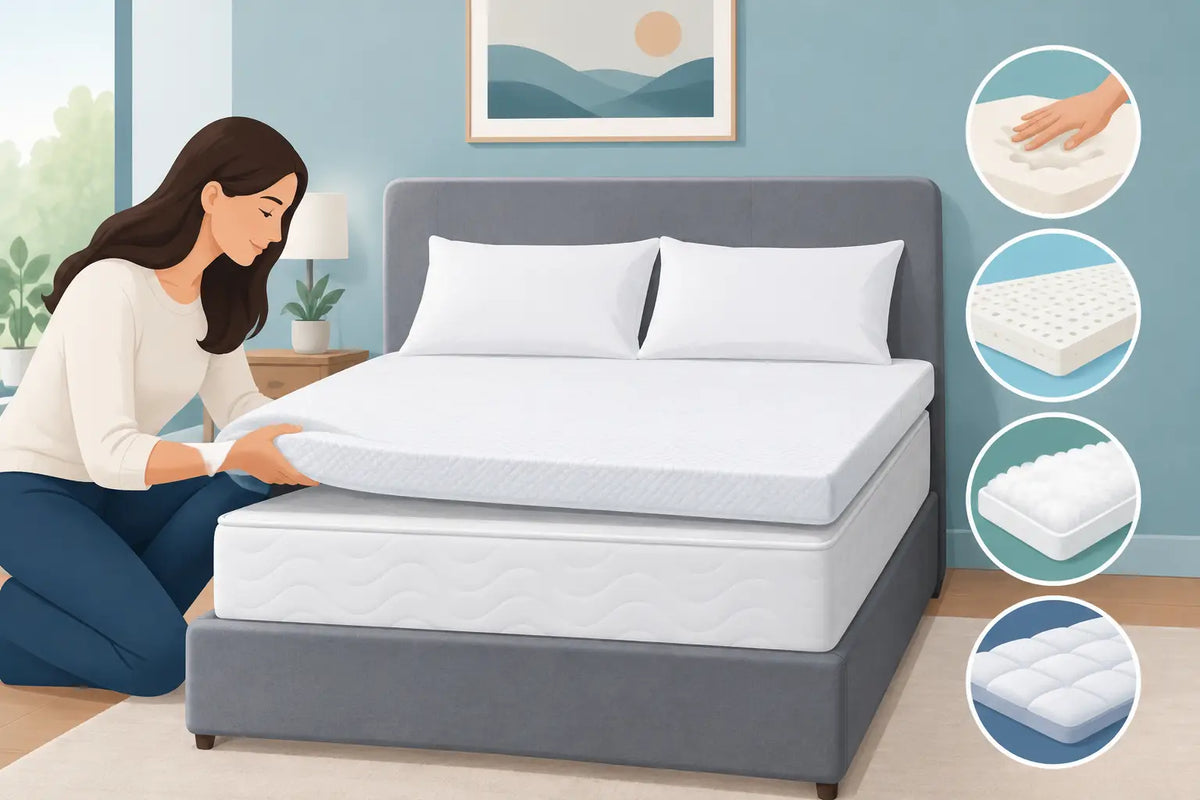
A mattress topper is often bought after one bad week of sleep: a hip that starts aching before morning, a mattress that suddenly feels too firm, or a guest bed that needs to become usable without replacing everything on it. It can make a worthwhile difference, but it is not a cure for every mattress problem. The useful question is not simply whether you need one. It is what, exactly, you are trying to change.
A good topper changes the surface feel of a bed. It can add pressure relief, a little more cushioning or a cooler, springier layer between you and the mattress beneath. It cannot restore broken springs, correct a deep body impression or make an unsupportive mattress structurally sound. Being clear about that distinction prevents an expensive disappointment.
When a mattress topper is the right answer
A topper is most effective when the mattress is still supportive but its comfort level is wrong. Perhaps a firm pocket sprung mattress supports your back well but puts too much pressure on your shoulders when you sleep on your side. Perhaps a new mattress feels firmer than expected and needs a gentler settling-in period. Or perhaps two people sharing a bed have different preferences and want to soften the surface without losing the support of the mattress below.
It is also a practical choice for a spare room, caravan, boat berth or occasional-use bed. In these situations, replacing a complete mattress may be unnecessary, especially where there is a sound base already in place.
There are limits. If you can feel springs, the mattress dips visibly, the edge has collapsed, or you wake with the sense that your hips are dropping lower than your shoulders, start with the mattress itself. A soft topper on a worn-out bed usually makes that lack of support more noticeable. It can also increase heat retention and make turning over harder.
Choose the material before the marketing term
Topper labels can be vague. Terms such as “luxury”, “orthopaedic” and “hotel quality” tell you very little about what is inside. “Orthopaedic”, in particular, has no formal medical standard in the mattress trade. Look instead at the filling, thickness and the feel you want from it.
Memory foam for close pressure relief
Memory foam responds to heat and pressure, allowing the body to sink into the surface rather than rest entirely on top of it. It is often useful for side sleepers who need more cushioning around the shoulder and hip, and for people who prefer a stiller, more enveloping feel.
The trade-off is warmth. Traditional memory foam can hold heat, although open-cell and gel-infused versions may reduce that effect. It also has a slower response than latex or fibre, which some people enjoy and others find restrictive when changing position. Density matters more than dramatic product names: very low-density foam may feel comfortable initially but is less likely to hold its shape well over time.
Latex for buoyant comfort
Latex gives pressure relief in a different way. It contours, but it also pushes back quickly, producing a more responsive and buoyant surface. It is a sensible option for combination sleepers, couples who do not want to feel stuck in the bed, and anyone who sleeps warm and wants better airflow than dense memory foam typically provides.
Natural latex has a distinctive feel and a higher material cost than many synthetic foams. It is also heavy. That is not a fault, but it does mean a thick latex topper can be less convenient to lift, air or move between rooms. Check whether a product uses natural latex, synthetic latex or a blend, as these are not interchangeable materials.
Wool and natural fillings for temperature balance
Wool is valued because it helps manage moisture and temperature. It can feel comfortable across changing seasons, offering a drier, less clammy sleep surface than many solid foam layers. Natural-filling toppers may include wool alongside cotton, cashmere or other fibres, and tend to suit buyers who want breathable comfort with a traditional mattress feel.
They do not usually create the deep contouring of memory foam. They may also need occasional turning or plumping to keep the filling evenly distributed. That maintenance is normal for natural loose fillings, not evidence that a topper has failed.
Fibre for an affordable softness boost
Hollowfibre and microfibre toppers are light, soft and usually the least expensive route to making a bed feel plusher. They can work well on a guest bed or when you simply want a little extra softness. Their weakness is durability: fibres compress more readily than foam, latex or well-made natural fillings. Treat them as a comfort layer rather than a long-term fix for a hard mattress.
Thickness and firmness: do not assume more is better
Most toppers sit between roughly 2.5 cm and 10 cm deep. A thinner topper adjusts the feel without dramatically altering how the bed supports you. A deeper topper has a more noticeable effect, but it also raises the sleeping surface, changes how fitted sheets sit and can make a soft bed feel less stable.
For a mattress that is broadly right but slightly too firm, a 2.5 cm to 5 cm topper is often enough. If you need clear pressure relief from a supportive but firm mattress, 5 cm or more may be appropriate. Very deep soft toppers are best approached carefully, particularly by stomach sleepers and heavier sleepers. Too much give beneath the pelvis can put the lower back in an awkward position.
Your sleeping position provides a useful starting point. Side sleepers commonly benefit from more surface cushioning. Back sleepers usually need a balanced feel that supports the lumbar area without pushing the hips up. Front sleepers generally need the flattest, firmer surface of the three. Body weight also changes the result: a person who is heavier will compress a topper more, so a very soft, thin layer may have little lasting effect.
Make sure the topper fits the bed, not just the label
A UK single, double, king size or super king topper should match the mattress dimensions closely. Measure the mattress rather than relying solely on a frame label, especially with antique beds, imported frames and made-to-measure mattresses. A topper that is too short can creep away from the headboard; one that is too wide can curl at the edges and interfere with fitted sheets.
Depth deserves equal attention. Add the topper depth to the mattress depth, then check your fitted sheet’s stated capacity. A 28 cm mattress with a 7.5 cm topper needs a considerably deeper sheet than the mattress alone. If the sheet corners continually pull loose, the problem is often the combined depth, not the quality of the sheet.
For unusual bed sizes, the dimensions should be the first specification, not an afterthought. A properly sized topper is more comfortable and tidier than trying to force a standard size onto a narrow boat berth, a short antique frame or an oversized bed.
How to use and care for a topper
Place the topper directly on top of the mattress, then fit a mattress protector over both where possible. A protector helps guard against spills, sweat and skin oils while keeping the topper easier to manage. Check the care label before buying, because washable covers, removable covers and spot-clean-only designs require different expectations.
Air the topper when changing bedding and rotate it from head to foot every few months if the manufacturer permits it. Memory foam and latex should not usually be folded tightly for storage. Natural-filling toppers may benefit from gentle shaking or light plumping. None should be used to hide a damp or mouldy mattress underneath.
If a new foam topper arrives rolled, allow it time to expand in a ventilated room before judging its final feel. A mild new-product smell can occur with foam and normally disperses with airing. Strong or persistent odours are not something to ignore.
A comfort upgrade, not a substitute for support
The best topper is specific about what it does: it softens a firm surface, adds breathable cushioning, relieves pressure, or improves an occasional bed. It should not need grand claims to justify itself. Choose the material for the feel you prefer, the depth for the change you actually need, and the dimensions for the mattress you own.
If the underlying mattress is still sound, that is often all it takes to make the bed more comfortable night after night. If it is not sound, a topper can still be useful on a future bed, but replacing the mattress is the more honest starting point.