
Gel Foam Mattress Pros and Cons Explained
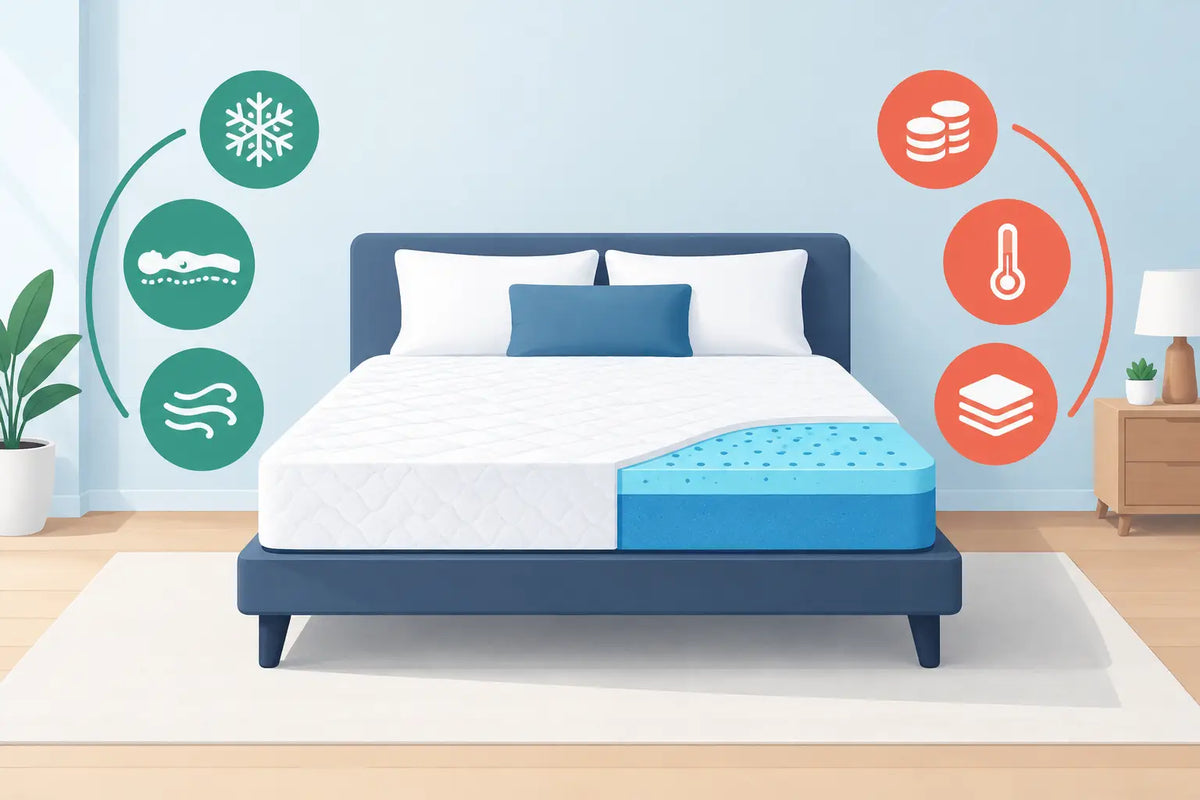
A gel foam mattress is often sold as the answer to overheating, pressure points and restless nights. The reality is more measured. Understanding gel foam mattress pros and cons means looking beyond the label: how much gel is present, what sits beneath it, and whether the whole mattress suits your body, bed frame and sleeping habits.
“Gel foam” is not a tightly regulated mattress category. It usually describes polyurethane memory foam or comfort foam with gel beads, particles or a gel infusion added during manufacture. That can change the feel and thermal behaviour of the foam, but it does not turn every gel mattress into a genuinely cool mattress. Construction matters more than the word printed on the cover.
What Is Gel Foam, Exactly?
Traditional memory foam softens in response to body heat and pressure. This lets it contour closely around the shoulders, hips and lower back. Gel foam is designed to retain much of that pressure relief while reducing the heat build-up associated with dense, slow-response foam.
The gel may absorb heat initially, spread it through the foam, or alter the foam’s structure to encourage a little more airflow. These are useful effects, but they are limited. Once the mattress has absorbed your body heat for several hours, the quality of the cover, the depth of foam, room temperature, bedding and the support core all affect whether you sleep comfortably.
A mattress with 2 cm of gel-infused foam over a breathable pocket spring unit will behave very differently from one with several deep layers of dense foam over a solid foam base. Both may be described as gel foam.
Gel Foam Mattress Pros and Cons at a Glance
Gel foam’s main strengths are pressure relief, reduced motion transfer and a close, cushioned feel. Its drawbacks can include variable temperature control, a slower response when changing position, and less edge stability than some spring-led mattresses. None is automatically a deal-breaker. The right choice depends on what you need the mattress to do.
The Advantages of a Gel Foam Mattress
Pressure relief around shoulders and hips
This is where gel foam can be particularly effective. It spreads weight over a wider surface than a firmer, more resilient material, which can reduce concentrated pressure at the shoulder and hip. Side sleepers often appreciate this contouring, especially if their current mattress feels hard at the pressure points.
For couples with different body shapes, a foam comfort layer can also make a firmer support core feel more accommodating. The support should still come from beneath, however. Deep softness alone is not the same as good spinal alignment.
Less partner disturbance
Foam absorbs movement rather than passing it across the mattress. If one person gets up early, turns frequently or has a noticeably different sleep schedule, gel foam can reduce the feeling of movement on the other side of the bed.
This benefit is strongest in all-foam models, though it comes with a trade-off: these mattresses may feel less lively and can be warmer. Pocket springs also isolate movement well while providing more airflow and a little more bounce.
A more forgiving feel than plain firm foam
Gel foam can make a mattress feel less harsh at first contact than conventional high-density support foam. Depending on the formulation, it may recover more quickly than traditional memory foam too. That can appeal to sleepers who like contouring but dislike the pronounced “stuck in the mattress” sensation associated with older memory foam designs.
No springs to feel through the surface
In an all-foam mattress, there are no spring units beneath the comfort layers. That can suit people who prefer a quiet, uniform sleeping surface. It can also be practical for adjustable bases, provided the mattress is specifically designed to flex without damage.
The Limitations Worth Considering
Cooling claims need a little scepticism
Gel is not air conditioning. A gel layer may feel cooler when you first lie down, and it can improve heat distribution, but it cannot remove heat from the bed indefinitely. A thick all-foam mattress still has less air circulation than an open-coil or pocket sprung design.
If you regularly wake hot, look for the full construction rather than relying on gel alone. A breathable knitted cover, ventilated foam, a pocket spring core and moisture-managing natural fillings can all make a meaningful difference. Avoid assuming that “cooling gel” guarantees a cool night’s sleep.
It may feel slow to move on
Even faster-response gel foam has more contour than latex or a responsive sprung mattress. Combination sleepers who change position often may find deep foam slightly restrictive, particularly if the room is warm and the foam softens further overnight.
This is a personal preference, not a fault. Some people like the secure, cradled sensation. Others prefer a mattress that responds immediately when they roll over or sit on the edge.
Edge support can be weaker
The usable sleeping area matters, particularly in a standard double shared by two adults. Foam mattresses can compress more at the edge when sitting to dress or lying close to the perimeter. Better models use firmer perimeter foam, while pocket sprung mattresses may use reinforced side support.
For a made-to-measure mattress in an unusual bed frame, measure the internal ledge and usable width carefully. There is little value in ordering a precise size if the mattress loses too much practical space at the edges.
Foam density and depth affect durability
Not all foam is equal. A vague claim such as “premium gel memory foam” tells you very little without density, layer depth and information about the support core. Softer, lower-density foams can develop body impressions sooner, especially under heavier use. That does not always mean the mattress has failed, but it can alter comfort and alignment.
A well-built mattress uses the comfort layer for comfort and a suitably firm core, springs or both for support. Heavier sleepers should pay particular attention to the support system and total mattress depth rather than simply choosing the deepest layer of gel foam.
There can be an initial manufacturing odour
New foam products can release a noticeable odour when unpacked. This is usually temporary and is best managed by airing the room and allowing the mattress to expand fully before use. It is not unique to gel foam, but it is more common with foam-based mattresses than with traditionally filled, hand-built designs.
If smell sensitivity is a concern, do not overlook mattresses made with wool, cotton, latex or other natural fillings. These materials have different characteristics, but they may be a better fit for your preferences.
Who Usually Benefits From Gel Foam?
A gel foam mattress is often a sensible choice for side sleepers who want pressure relief, couples prioritising motion isolation, and people who enjoy a close-fitting feel without the slowest traditional memory foam response. It can also work well in beds where a quiet, flexible mattress is required.
It is less likely to suit very hot sleepers, people who need a firmer edge for mobility, or anyone who prefers to sleep on rather than in their mattress. Those buyers may be better served by a pocket sprung mattress with a modest foam comfort layer, or by latex, which is naturally more buoyant and breathable.
Back sleepers can be comfortable on gel foam, but the firmness needs to be judged carefully. The lower back should be supported rather than allowed to sink. Front sleepers generally need a firmer, flatter surface to prevent the hips dropping too far, so thick soft foam is rarely the first choice.
What to Check Before You Buy
Start with the specification, not the marketing name. Ask how deep the gel foam layer is, what lies below it, whether the mattress is one-sided, and how the edges are constructed. A mattress listed simply as “gel memory foam” is not enough information for a considered purchase.
Then consider your bed base. A slatted base needs adequately spaced, supportive slats; a solid platform can reduce airflow beneath an all-foam mattress. Check the manufacturer’s guidance, particularly for a bespoke size, a day bed, boat berth or antique frame where support arrangements are less standard.
Finally, think about the practical size of the bed. If two people feel cramped on a double, changing the mattress material will not create more room. A wider made-to-measure mattress may improve sleep more than any cooling additive, provided the frame and bedroom allow for it.
The Straight Answer
Gel foam is a useful material, not a miracle material. It can deliver excellent pressure relief and good motion isolation, with a slightly cooler and more responsive feel than traditional memory foam. But gel alone cannot overcome a poorly designed foam mattress, weak edge support or a bedroom that runs warm.
Choose it when you genuinely like contouring and value reduced partner movement. If you are unsure, focus on the full build, the support beneath the comfort layers and the dimensions that give you room to sleep properly. The best mattress is the one built around your actual needs, not the most impressive-sounding ingredient list.