
Emperor Mattress Dimensions and Room Space
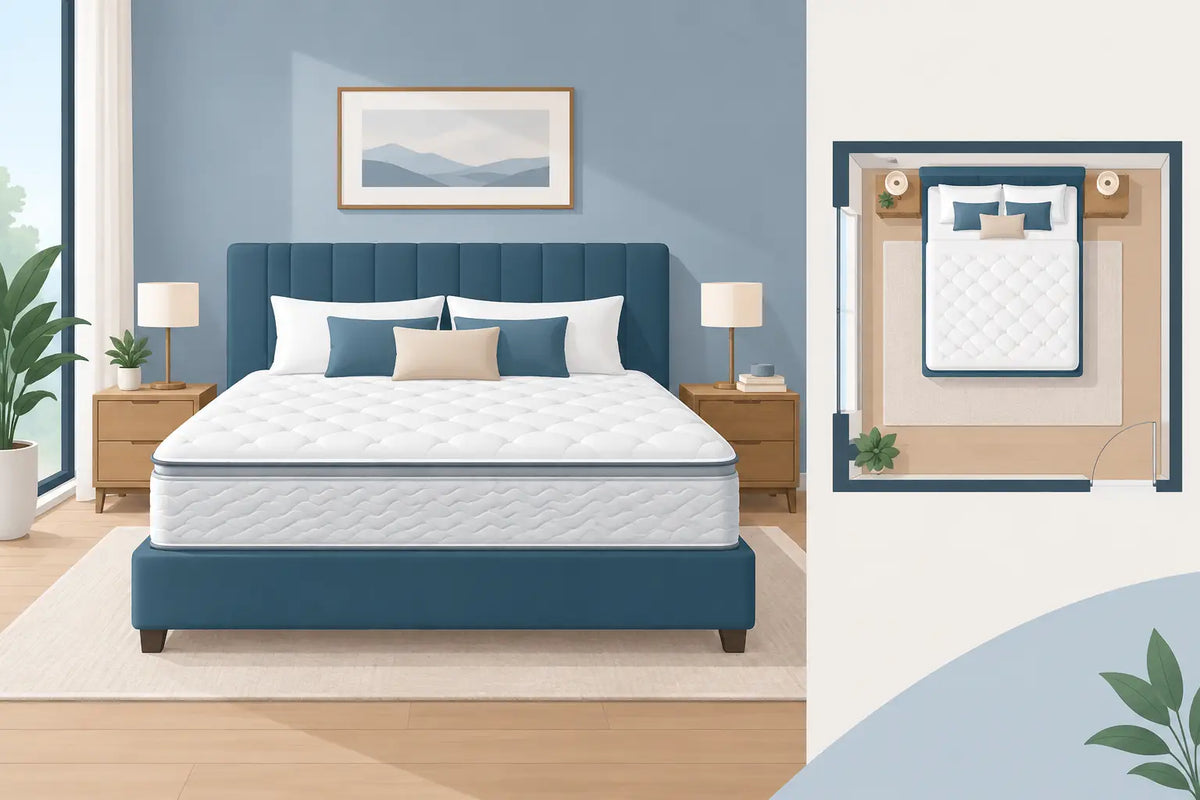
An emperor bed is not simply a larger king size. At 200 x 200 cm, emperor mattress dimensions give each sleeper a full metre of width - the same personal space as a single bed, without sleeping separately. That can make a real difference for couples, tall sleepers, families with an occasional early-morning visitor, and anyone tired of negotiating the duvet at 3am.
The trade-off is straightforward: an emperor mattress needs a proper room, a correctly sized frame and bedding that fits. Before choosing one, measure the space around the bed as carefully as the mattress itself.
What are emperor mattress dimensions?
A standard UK emperor mattress measures 200 cm wide by 200 cm long. In traditional imperial terms, that is commonly described as 6 ft 6 in by 6 ft 6 in. It is a square mattress, unlike a king size or super king, which are both longer than they are wide.
For comparison, a UK king size is 150 x 200 cm and a super king is 180 x 200 cm. An emperor adds 20 cm of width to a super king. That may not sound dramatic on paper, but it provides 10 cm extra for each person and creates noticeably more room across the bed.
| UK mattress size | Width x length |
| --- | --- |
| King size | 150 x 200 cm |
| Super king | 180 x 200 cm |
| Emperor | 200 x 200 cm |
Mattress size names are useful shorthand, not a substitute for a tape measure. A bed frame sold as an emperor should be designed for a 200 x 200 cm mattress, but its outside measurements can be substantially larger. A wide upholstered surround, chunky wooden rails or a footboard may add 10 to 30 cm, sometimes more, in each direction.
Will an emperor bed fit your bedroom?
The mattress footprint alone is four square metres. Once the frame is included, an emperor bed often occupies closer to 220 x 220 cm, depending on its design. That is why a room plan matters more here than it does with a standard double.
As a practical starting point, aim for at least 60 cm of clear floor space on both sides and at the foot of the bed. This allows you to walk around it, change sheets and open drawers without turning the room into an obstacle course. If one side sits against a wall, that can work perfectly well, but think about who will make the bed and whether both sleepers need easy access.
Door swings, wardrobes, radiators and windows deserve attention too. Measure at skirting-board level and at the widest point of the frame, not just across open floorboards. In a loft room or period property, check the route from the front door to the bedroom as well. A rolled mattress is easier to manoeuvre upstairs than a fully finished border model, although some heavy, hand-tufted mattresses are delivered flat for good reason.
A square shape changes the room layout
An emperor is 200 cm long, the same length as a king or super king, but its extra width can alter where bedside tables and furniture will sit. It is particularly worth planning in narrower rooms, where a super king may leave useful circulation space and an emperor may not.
For a large main bedroom, however, the square proportion can look considered rather than oversized. It also gives a tall sleeper more freedom to sleep diagonally without taking space from their partner.
Emperor mattress dimensions versus bed frame dimensions
A common and expensive mistake is measuring the outer edge of an existing frame and ordering a mattress to match. The only measurement that matters for the mattress is the internal platform or the distance between the inside faces of the rails.
Measure the width and length in several places. Older wooden frames can be slightly out of square, and upholstered frames may have rails that curve inwards. Take the smallest usable measurement, then consider how snugly the mattress needs to fit. A mattress that is a few millimetres smaller than the frame is normal. One that is several centimetres short will shift, leave gaps and look untidy.
Depth is relevant too. There is no single standard emperor mattress depth. A simple foam mattress may be around 20 cm deep, while a substantial pocket-sprung mattress with natural fillings and hand tufting can be 28 cm or more. Deep mattresses can make a low frame easier to get in and out of, but they may partly cover a headboard or make fitted sheets harder to find.
Do you need standard or bespoke emperor dimensions?
If your frame has a true 200 x 200 cm internal space, a standard emperor mattress is the sensible choice. It gives you the broadest choice of protectors, sheets, duvets and bed linen, and it avoids paying for custom work where none is needed.
Bespoke becomes worthwhile when the frame is not truly standard. Antique beds, imported frames, alcoves, boats and handmade joinery often use measurements that are close to emperor size but not quite there. A 198 x 198 cm mattress, for example, is not an emperor in retail terminology, but it may be exactly the right mattress for the bed you own.
Do not force a 200 x 200 cm mattress into a smaller opening. Compressing foam at the corners or bowing the bed rails can damage both mattress and frame. Equally, choosing a standard size that leaves a large gap is not a good compromise. A made-to-measure mattress should be built to the finished internal dimensions, with the appropriate allowance for a practical fit.
Cadar Beds makes mattresses to specified widths and lengths, including sizes beyond standard emperor dimensions. The useful part is not the label on the order. It is being able to choose the size that fits the frame, then select the spring system, filling and firmness that suit the people sleeping on it.
Choosing the right mattress construction at 200 x 200 cm
An emperor is large enough that its construction matters. There is more material, more surface area and, usually, more weight to support. The right option depends on sleep position, body weight, temperature preferences and how much movement each person makes during the night.
Pocket springs are a sensible starting point for many couples because each spring responds more independently than an open-coil unit. This can reduce the sensation of a partner turning over, particularly in a wide bed where you are already further apart. A hybrid mattress combines springs with foam or latex layers and can offer pressure relief with a more buoyant feel than all-foam construction.
Memory foam can suit people who like close contouring, but it is not automatically the best answer for aches and pains, despite what mattress advertising sometimes suggests. Some sleepers find it warm or slow to respond. Latex is usually springier and more breathable, while natural fillings such as wool can help with moisture management and create a traditionally upholstered feel.
For heavier sleepers, look beyond a vague firmness label. Ask how the mattress is built: the spring gauge, spring count where relevant, filling layers, edge support and intended load all matter. “Orthopaedic” is not a regulated medical standard, so it tells you little on its own.
One firmness or two?
A 200 cm-wide mattress gives enough room for different comfort needs, but a single mattress still has one overall construction unless it is made with split tensions. Split-tension emperor mattresses can place a firmer side beside a softer side, often with a continuous cover and shared sleeping surface.
This is useful where one partner is considerably heavier, prefers a firmer feel or sleeps on their back while the other sleeps on their side. It is not a cure for every comfort problem, but it is more honest than expecting one generic medium mattress to suit two very different bodies equally well.
Bedding for an emperor bed
Buy bedding after confirming the actual mattress dimensions and depth. Emperor fitted sheets are made for a 200 x 200 cm mattress, but pocket depth varies. Measure from the base to the highest point of the mattress, including any topper, then allow enough fabric to grip beneath it.
An emperor duvet is typically 290 x 235 cm. It gives generous overhang on a 200 cm-wide bed, though some couples prefer two smaller duvets if they have very different warmth preferences. That approach is common in parts of Europe and has one obvious advantage: nobody can take the entire duvet during the night.
Mattress protectors should match the width and length closely. A super king protector at 180 x 200 cm will not stretch properly over an emperor, and an oversized protector can bunch beneath the sheet.
Check these measurements before ordering
Before committing to an emperor, write down the internal width and length of the frame, the external footprint of the frame, your mattress depth preference and the clear walking space left around the bed. Then measure the tightest point on the delivery route.
An emperor mattress is a worthwhile upgrade when the room can carry it and the frame genuinely fits it. Get the measurements right first, and you can spend the next decade appreciating the extra space rather than working around a bed that was too large for the room or too small for the frame.