
Best Mattress for Hip Pain and Better Sleep
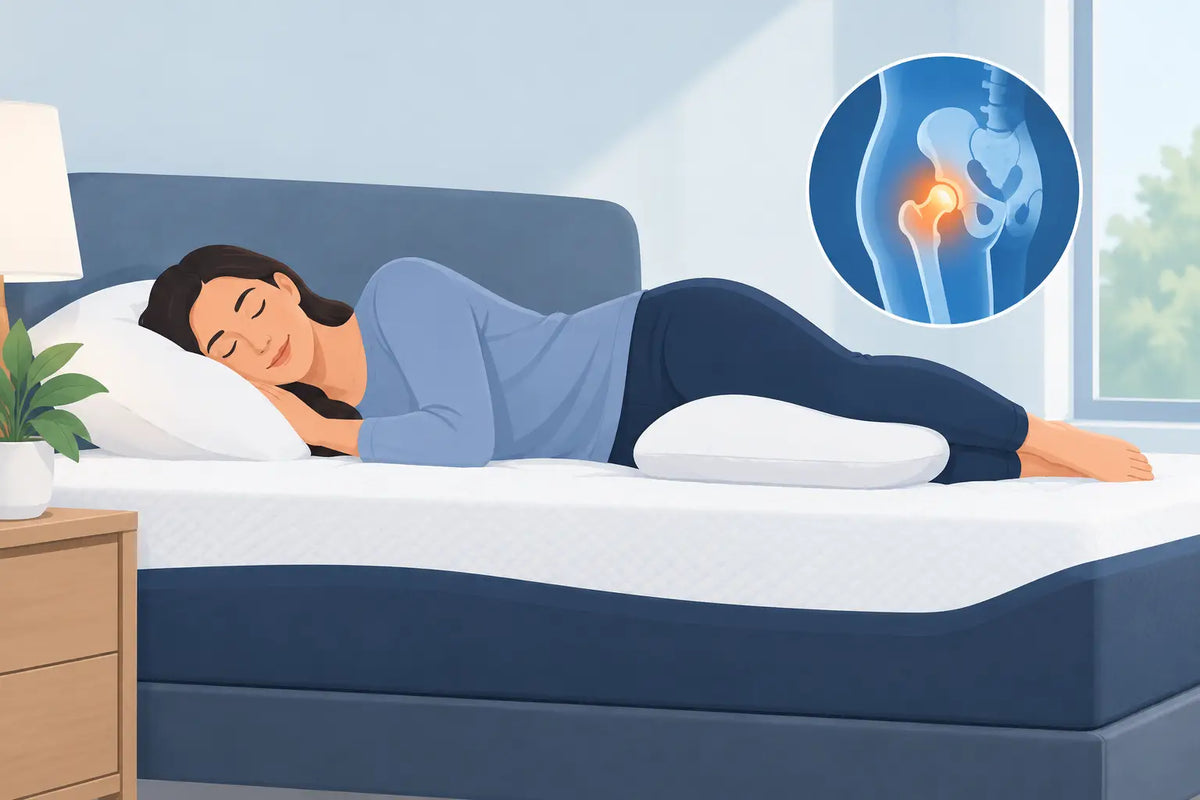
Waking with an aching outer hip is often blamed on age, exercise or a long day on your feet. Sometimes the mattress is part of the problem. The best mattress for hip pain is not a single model or a fashionable label. It is one that keeps your spine reasonably level while allowing your hips and shoulders enough room to settle without being forced against an unyielding surface.
That balance matters most for side sleepers, but it can affect anyone whose mattress has dips, hard pressure points or insufficient support beneath the pelvis. A mattress cannot diagnose or treat a medical condition. Persistent, severe or worsening hip pain deserves advice from a qualified clinician. But if discomfort is mainly worse in bed or when you wake, changing the sleep surface can make a meaningful difference.
Why mattresses can aggravate hip pain
Your hips carry a large share of your weight when you lie on your side. On a mattress that is too firm, the greater trochanter - the bony point on the outside of the thigh - takes concentrated pressure. You may find yourself turning repeatedly to escape the discomfort, or wake with soreness along the side of the hip.
A mattress that is too soft creates a different issue. The hips sink farther than the waist and upper body, leaving the spine bent or twisted for hours. This is particularly common when an older mattress has softened in the centre, even if it still feels comfortable for the first few minutes.
The aim is pressure relief without a hammock effect. That requires both a comfort layer that cushions the hip and a support system that resists excessive sinkage. More padding alone is not automatically better.
Best mattress for hip pain: start with firmness
Firmness is useful shorthand, but it is not a universal measurement. A medium mattress can feel firm to a lighter person and soft to someone of a heavier build. Construction, body weight, sleeping position and the bed base all alter the result.
For many average-weight side sleepers with hip discomfort, medium or medium-firm is the sensible starting point. It gives the hip some contouring room while retaining enough support to keep the body aligned. A lighter side sleeper may need a slightly softer surface, particularly if they feel pressure quickly. A heavier person, or someone who sleeps on their back or front, will usually need a firmer support core beneath the comfort layers.
Be wary of the word “orthopaedic”. There is no formal medical standard that a mattress must meet before carrying that label. It does not tell you the spring type, the amount of upholstery, or whether the mattress will suit your build. Look instead at the actual construction and the stated firmness.
Side sleepers need cushioning at the surface
If you sleep mainly on your side, your shoulder and hip must sink slightly farther than the rest of your body. Memory foam is effective at spreading pressure, especially where pain is focused over the outer hip. It responds to body heat and weight, moulding around the body rather than pushing sharply back against it.
The trade-off is feel and temperature. Traditional memory foam can feel warmer and slower to move on. Some people enjoy the enveloping sensation; others feel stuck in it. A hybrid mattress, combining foam comfort layers with pocket springs, can offer similar pressure relief with a more responsive feel and better airflow around the spring unit.
Latex is another strong option for people who dislike the slow response of memory foam. It has a buoyant, springy feel, cushions pressure points and tends to sleep cooler. Natural latex is also a durable material, although it often produces a firmer, more lifted feel than deep memory foam.
Back sleepers need steadier pelvic support
Back sleepers can still experience hip pain, particularly if the pelvis drops into a worn mattress. Medium-firm to firm is commonly more suitable here, depending on body weight. The mattress should support the natural curve of the lower back without leaving a large gap beneath it or pushing the hips upwards.
Pocket springs are useful because each spring works more independently than a conventional open-coil unit. This helps the mattress respond to the body’s shape rather than behaving as one broad, flat surface. A supportive spring unit topped with wool, cotton, latex or foam can work well, provided the comfort layers are not so deep that the hips lose support.
Front sleepers should avoid excessive softness
Front sleeping places more demand on the lower back and pelvis. If the hips sink deeply, the lower spine can be held in an exaggerated curve. A firmer mattress with modest comfort layers is usually the safer direction, even if the hip itself feels better on a softer surface at first.
If you regularly switch between front and side sleeping, a medium-firm hybrid is often the practical compromise. There is no perfect mattress for every position, but a balanced build is better than choosing a very soft model solely for pressure relief.
Look beyond the top layer
A thick quilted top can make a mattress feel inviting in a showroom or after it arrives in a box. It does not, by itself, show how well the mattress will support you over time. Ask what sits underneath.
Pocket springs provide targeted support and can reduce movement transfer between partners. This matters if one person turns frequently because of discomfort. Open-coil mattresses can be good value and suitable for occasional use, but they generally offer less individual contouring and may not be the first choice for ongoing hip pressure.
Natural fillings have their own character. Wool is breathable and helps regulate moisture, while cotton adds a firmer, drier feel. Horsehair and coir are resilient, breathable fillings used in more traditional, firmer constructions. They can be excellent for durability and airflow, but a mattress with substantial natural upholstery may still need a softer comfort layer for a prominent hip.
Hand tufting keeps fillings in place and can extend the working life of a mattress. It also creates a firmer, more structured sleep surface than a deep pillow top. Neither approach is inherently better. Choose the feel that suits your body rather than assuming a taller or more heavily upholstered mattress must be more comfortable.
Your body weight and bed base change the answer
The same mattress feels different under different loads. A person of lighter build may barely engage a firm spring unit and experience it as hard. A heavier sleeper may compress soft foam too far and need a stronger spring system, higher-density foam or a heavy-build design to maintain support.
Your base matters too. A mattress on sprung slats can feel softer than it does on a solid platform. Slats that are widely spaced, bowed or damaged can create uneven support and shorten a mattress’s life. Before replacing the mattress, inspect the frame and centre support, especially on a double, king size or larger bed.
For couples with very different builds, compromise can be difficult. Two mattresses with separate comfort levels in one shared frame can be more sensible than forcing both people onto a firmness that suits neither. This is also worth considering for unusual bed sizes, where a made-to-measure mattress can be built to the exact width, length and depth required rather than adapting your needs to a standard size.
Do not use a topper to hide a failed mattress
A topper can help when a mattress is structurally sound but just a little too firm. A 5 cm memory foam, latex or softer fibre topper may reduce pressure over the hip and is a lower-cost way to test whether added cushioning helps.
It will not fix sagging springs, a permanent body impression or a mattress that has lost its underlying support. Adding softness to an already unsupportive bed usually makes alignment worse. If you can see dipping, feel the frame through the surface, or roll towards the middle, replacement is the more honest answer.
A practical way to choose
Start with how you sleep, your approximate body weight and where the discomfort occurs. Side sleepers with outer-hip pressure should generally prioritise contouring comfort over an aggressively firm surface. Back and front sleepers should give more weight to stable pelvic support. Then check the materials and support system, not just the product name or promotional discount.
Allow your body time to adjust. A new mattress can feel unfamiliar for the first week or two, particularly if you are replacing one that has sagged gradually. A trial period is useful, but use it properly: sleep on the mattress consistently, with a suitable protector, and pay attention to how you feel on waking rather than judging it after one afternoon lie-down.
If your hip pain has started recently, consider the whole sleep set-up as well. A pillow between the knees can help side sleepers keep the pelvis more level, while a pillow under the knees may ease tension for back sleepers. Small adjustments are not a substitute for proper support, but they can make a well-chosen mattress work even better.
The right mattress should not promise miracles. It should give your hips room to rest, keep your body supported through the night, and still feel comfortable after months of ordinary use. That is a far better standard than any vague wellness claim.